Chianti & Chianti Classico — The Soul of Tuscany
Chianti is one of the world's most celebrated, recognised, and beloved wine styles — the red wine of Tuscany, the wine of the Italian table, and one of the great expressions of the Sangiovese grape. From the approachable, fruit-forward wines of the broader Chianti DOCG to the structured, complex, and age-worthy expressions of the Chianti Classico DOCG — produced in the historic heartland between Florence and Siena — Chianti encompasses a remarkable diversity of styles, terroirs, and producers united by a common thread of Sangiovese character, Tuscan soul, and an extraordinary affinity with food.
History & Heritage
The history of Chianti is inseparable from the history of Tuscany itself. Wine has been produced in the hills between Florence and Siena since Etruscan times, and the name Chianti has been associated with the wines of this region since at least the 13th century. The modern Chianti wine zone was formally defined in 1716 by Cosimo III de’ Medici, Grand Duke of Tuscany — one of the earliest examples of a legally defined wine appellation anywhere in the world — and the region has been at the centre of Italian wine culture ever since.
The Chianti Classico zone — the historic heartland of Chianti production, encompassing the municipalities of Greve in Chianti, Panzano, Radda, Gaiole, and Castelnuovo Berardenga — was established as a separate and superior appellation in 1996, recognising the distinctive character and quality of wines produced in this ancient and celebrated landscape. Chianti Classico wines are distinguished by the iconic Gallo Nero — the Black Rooster — on their neck label, a symbol that dates to the medieval rivalry between Florence and Siena and has become one of the most recognisable emblems in the world of wine.
The Region: Tuscany, Italy
Tuscany is Italy's most celebrated wine region — a landscape of extraordinary beauty, ancient history, and viticultural diversity that produces some of the world's most admired and collected wines. The region's Mediterranean climate — warm, dry summers and mild, wet winters — is moderated by altitude and the cooling influence of the Apennine Mountains and the Tyrrhenian Sea, creating ideal conditions for producing wines of natural acidity, aromatic complexity, and structural elegance.
The Chianti Classico zone occupies the hills between Florence and Siena at elevations of 250 to 600 metres above sea level. The zone's diverse soils — ranging from the galestro (friable limestone schist) and alberese (compact clay-limestone) that are the geological signature of the region to the sandstone and clay of the lower slopes — produce Sangiovese of remarkable complexity, mineral precision, and longevity. The zone is divided into a series of distinct sub-zones — including Panzano, Castelnuovo Berardenga, Radda, and Gaiole — each with its own distinctive character and style.
Panzano in Chianti is one of the most celebrated sub-zones of the Chianti Classico, occupying a natural amphitheatre of south-facing slopes at 400–600 metres elevation. Panzano was the first Cru in Europe to be certified entirely organic, with all producers in the zone committed to organic viticulture — a distinction that reflects the extraordinary quality and integrity of the wines produced here.
Castelnuovo Berardenga, at the southern end of the Chianti Classico zone, is the warmest and most southerly sub-zone, producing wines of greater richness, concentration, and depth than the cooler northern sites. The zone's vineyards at 320–420 metres elevation on ventilated southwestern slopes produce Sangiovese of exceptional structure and longevity.
Sangiovese — The Heart of Chianti
Sangiovese is Italy's most planted grape variety and the soul of Chianti. In the Chianti Classico zone, Sangiovese must comprise a minimum of 80% of the blend — and the finest producers use 100% or close to it, believing that the variety's natural character of vibrant red cherry and wild berry fruit, characteristic savoury earthiness, firm but fine tannins, and the bright, food-friendly acidity that is Sangiovese's most distinctive quality is best expressed without dilution from other varieties.
Traditional blending varieties — Canaiolo and Colorino — are native Tuscan grapes that add colour, softness, and complexity to the blend without compromising the essential Sangiovese character. Some producers also use small amounts of international varieties such as Merlot and Cabernet Sauvignon, though the finest Chianti Classico estates increasingly favour the all-native approach as a statement of regional authenticity and terroir expression.
Chianti Classifications
Chianti DOCG — The broader appellation, encompassing wines from across the Chianti production zone. A minimum of 70% Sangiovese is required. Chianti DOCG wines are typically approachable, fruit-forward, and food-friendly — the everyday wines of the Tuscan table.
Chianti Classico DOCG — The historic heartland, with a minimum of 80% Sangiovese and stricter production requirements. Chianti Classico wines are more structured, complex, and age-worthy than the broader Chianti DOCG, with the Annata (standard), Riserva (minimum 24 months ageing), and Gran Selezione (minimum 30 months ageing, single vineyard or best selection) tiers offering a progression of quality and complexity.
Our Range
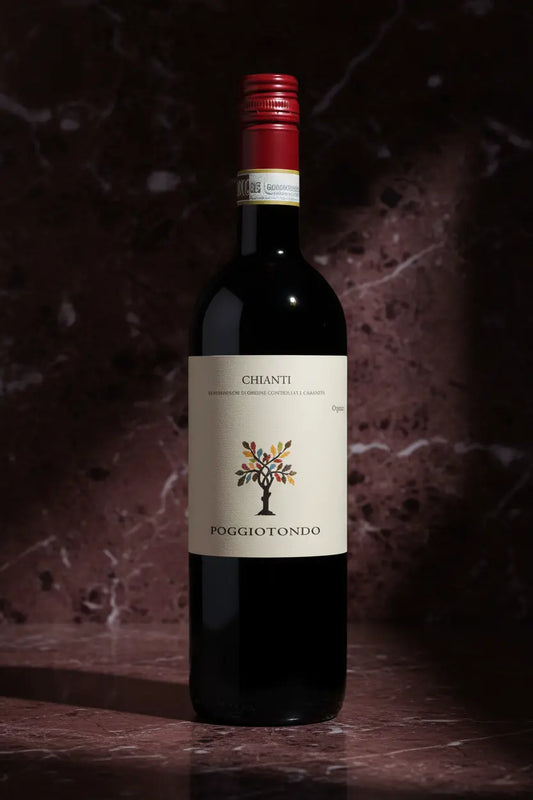
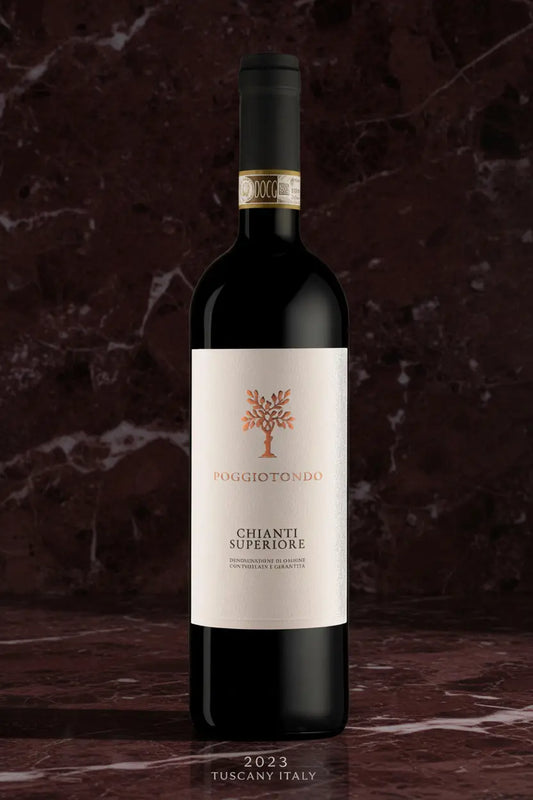
Poggiotondo Organic Chianti DOCG — Tuscany — A certified organic Chianti of genuine character and approachability. Crafted from 94% Sangiovese, 3% Canaiolo, and 3% Colorino, hand-harvested and fermented with indigenous yeasts in temperature-controlled cement tanks. Matured 50% in concrete and 50% in large un-toasted oak barrels. Lively ruby red with enticing hints of dried oregano, vibrant red and dark cherry aromas, ripe cherry flavours, and full-bodied tannins characteristic of traditional Chianti. A wine of genuine Tuscan character at an outstanding price.
Poliziano Colli Senesi Chianti DOCG — Tuscany — From one of Montepulciano's most celebrated and historically significant estates, certified organic from 2021. Aged six months in stainless steel and three months in bottle. Vivid ruby red with aromatic red fruit and subtle spice on the nose. Well-structured and refined on the palate with a persistent, elegant finish. Crafted with minimal intervention and no additives — a Chianti as natural and honest as possible. Outstanding with roasted white meats, pasta with tomato-based sauces, and aged Pecorino.
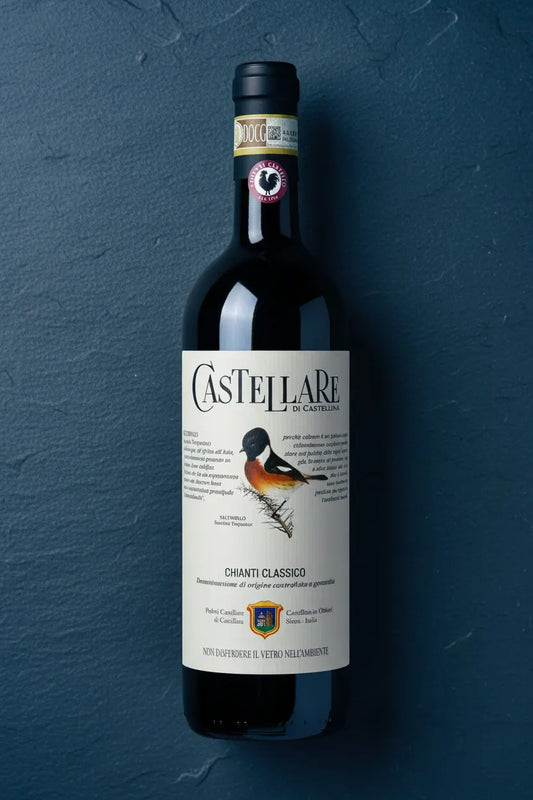
Castellare di Castellina Chianti Classico DOCG — Tuscany — A benchmark of the Chianti Classico style from one of the zone's most respected estates. Made exclusively from native varieties — without Cabernet or Merlot — to maintain the most typical formula of the most famous Italian wine. Lively ruby red with purple undertones, refined balance of tannins, intricate aromas, and a delicate sweetness. A wine of maximum elegance and authentic Chianti Classico character. Outstanding with structured main dishes, stewed meats, and medium-aged cheeses.
Vignole Chianti Classico DOCG — Panzano — Sourced from the Panzano Cru — the first Cru in Europe to be certified entirely organic — where all producers practise organic viticulture. A blend of 85% Sangiovese and 15% Merlot, hand-harvested and fermented separately in concrete vats before 12 months of individual oak ageing and a further 12 months of bottle ageing. Rich, deep red with wild berries, gladiolas, and violets on the nose. Full-bodied and generously structured on the palate with well-integrated tannins and a long, satisfying finish. A compelling expression of one of Tuscany's most celebrated terroirs. Outstanding with bistecca alla Fiorentina, wild boar ragù, and aged Pecorino.
Castello Monsanto Chianti Classico Annata DOCG — Tuscany — A distinguished Chianti Classico from one of the zone's most historic and celebrated estates. A blend of 90% Sangiovese with 10% Canaiolo and Colorino, vinified in steel truncated conical vats with délestage and pumping over for 18–20 days, then matured for 15 months in 3,800-litre French oak casks. Produced from the estate's youngest vines, the Annata combines readiness and generosity on the palate with the depth and mineral character that the Monsanto terroir imparts to all its wines. A wine of genuine complexity and regional authenticity.
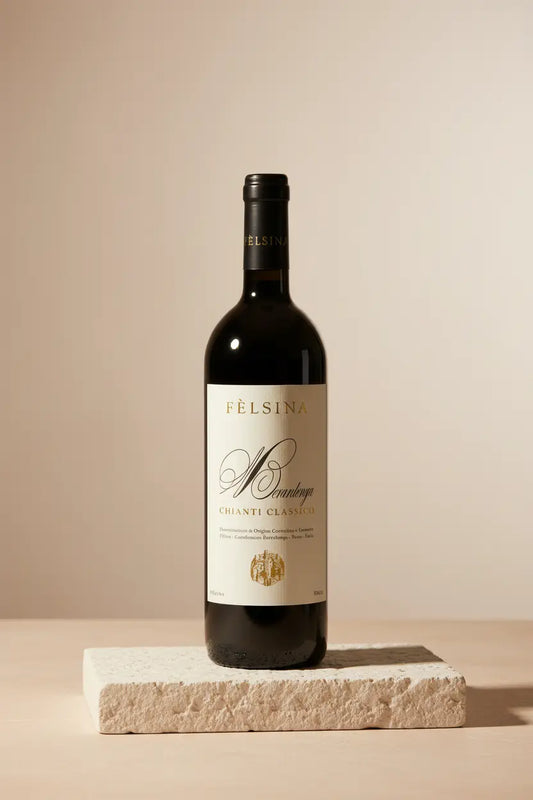
Fèlsina Berardenga Chianti Classico DOCG — Castelnuovo Berardenga — The cornerstone estate wine from one of Chianti Classico's most admired and historically significant producers, with a first vintage in 1967. Sourced from the Castelnuovo Berardenga vineyards at 320–420 metres altitude on ventilated southwestern slopes. Rich ruby with wild berries and spicy scents on the nose. Fruity palate with well-developed tannins and a satisfying, lingering finish. A wine of exceptional Tuscan character that is perfect with bistecca alla Fiorentina, wild boar ragù, pappardelle, and aged Pecorino.
How to Enjoy Chianti
All Chianti and Chianti Classico wines are best served at 16–18°C in a generous red wine glass. Chianti is one of the world's most food-friendly wines — its characteristic bright acidity, firm tannins, and savoury earthiness make it a natural partner for the full range of Italian cuisine. Bistecca alla Fiorentina, wild boar ragù, pappardelle with meat sauce, osso buco, roasted lamb, aged Pecorino and Parmigiano-Reggiano, and tomato-based pasta dishes are all classic pairings. The more structured Chianti Classico expressions reward decanting for 20–30 minutes and will continue to develop and reward for five to ten years in the cellar.
Explore our full Chianti range below and discover why this ancient Tuscan wine — the wine of Michelangelo, the Medici, and the Italian table — remains one of the world's most beloved and endlessly rewarding red wines.