Sherry — Spain's Most Complex & Misunderstood Wine
Sherry is one of the world's great fortified wines — a category of extraordinary depth, diversity, and history that remains, for many, one of the most rewarding discoveries in the world of wine. Produced exclusively in the Sherry Triangle of Andalusia, southern Spain, it ranges from bone-dry and saline to lusciously sweet and raisined, offering a style to suit every palate and occasion. Our curated range brings together two of Jerez's most celebrated producers — Lustau and Valdespino — across three classic Sherry styles.
The Region: Jerez de la Frontera & the Sherry Triangle, Andalusia
Sherry can only be produced within a strictly defined geographical area in the province of Cádiz, in the autonomous community of Andalusia in southwestern Spain. This region is known as the Sherry Triangle, defined by three towns: Jerez de la Frontera, Sanlúcar de Barrameda, and El Puerto de Santa María. It is one of Spain's oldest and most storied wine regions, with a winemaking history stretching back over 3,000 years to the Phoenicians, who first planted vines here around 1100 BC.
The region's climate is defined by its position between the Atlantic Ocean and the hot, dry interior of Andalusia. Summers are long, intensely hot, and dry, with temperatures regularly exceeding 40°C, while the Atlantic influence brings cooling sea breezes and the famous Poniente wind that moderates conditions in the vineyards. Annual rainfall is low — typically around 600mm — falling almost entirely in winter and spring.
The soils of the Sherry Triangle are among the most distinctive in the wine world. The prized albariza — a brilliant white, chalky limestone soil unique to the region — is the foundation of the finest Sherries. Its high calcium carbonate content gives it an extraordinary capacity to absorb and retain winter rainfall, releasing moisture slowly to the vine roots through the scorching summer months. It also reflects sunlight back onto the vine canopy, aiding ripening while keeping the grapes cool. The result is grapes of remarkable concentration, acidity, and character.
Grape Varieties
Three grape varieties are authorised for Sherry production, though in practice two dominate:
Palomino is the workhorse of the Sherry region, accounting for the vast majority of production. A naturally neutral grape, it is ideally suited to the oxidative and biological ageing processes that define Sherry's character. It is the sole variety used in Fino and Amontillado production.
Pedro Ximénez (PX) is the grape behind the region's great sweet Sherries. Harvested and then sun-dried on esparto grass mats — a process known as soleo — the grapes shrivel into near-raisins, concentrating their sugars to extraordinary levels before pressing and fermentation. The resulting wine is intensely sweet, viscous, and complex.
The Solera System
What makes Sherry truly unique among the world's wines is the Solera y Criaderas ageing system — a dynamic, fractional blending process in which wine is aged in a series of barrels arranged in tiers. The oldest wine sits in the bottom tier (the Solera), and as wine is drawn off for bottling, it is replenished from the tier above, which in turn is replenished from the tier above that, and so on. This continuous blending of wines of different ages creates a consistency of style and complexity that no vintage-dated wine can replicate, while also ensuring that every bottle carries the accumulated character of wines stretching back decades — or even centuries.
Sherry Styles in Our Range
Fino is the driest, lightest, and most delicate style of Sherry. Aged entirely under a living veil of yeast called flor that forms on the surface of the wine in the barrel, Fino is protected from oxidation, resulting in a pale, crisp, saline, and intensely fresh wine with characteristic almond and bread dough notes. It should be served well chilled and consumed fresh.
Amontillado begins its life as a Fino, aged under flor, before the flor dies and the wine is exposed to controlled oxidation. This dual ageing process — first biological, then oxidative — produces a wine of remarkable complexity: amber in colour, with hazelnut, dried fruit, and savoury umami notes alongside the freshness of its Fino origins. Amontillado ranges from dry to medium-dry.
Pedro Ximénez (PX) is the indulgent, opulent end of the Sherry spectrum. Aged oxidatively in American oak, PX develops an intense mahogany colour and a palate of extraordinary richness — raisins, figs, dates, dark chocolate, and molasses — with a velvety, almost syrupy texture. It is one of the world's great dessert wines, magnificent poured over vanilla ice cream.
Our Producers
Lustau — Founded in 1896 in Jerez de la Frontera, Emilio Lustau is widely regarded as one of the finest and most innovative Sherry houses in the region. The bodega is celebrated for its Almacenista range — single-cask Sherries sourced from small, private stockholders — as well as its exceptional Solera Reserva expressions. Lustau has been instrumental in the global Sherry renaissance, earning consistent recognition from the world's leading wine critics and competitions.
-
Lustau Solera Reserva Fino Jarana — Pale straw with greenish reflections. Fresh and pungent on the nose with almonds and bakery notes. Dry and crisp on the palate, rich with a full finish. Aged under flor in Bodega Las Cruces. 15% ABV.
-
Lustau Dry Amontillado Los Arcos — Amber in colour with hazelnut aromas. Light, soft, and round on the palate with a long aftertaste. Aged in American oak in Bodega Emperatriz Eugenia. Serve slightly chilled as an aperitif with nuts or cheese. 18.5% ABV.
-
Lustau Pedro Ximénez San Emilio — Ebony in colour with iodine highlights. Nose of figs and raisins. Enormously sweet, velvety, and soft on the palate with outstanding balance and a very long finish. 100% sun-dried PX grapes, aged in American oak in the traditional Solera system. 17% ABV.
Valdespino — One of the oldest and most revered Sherry houses in Jerez, Valdespino's history dates to the early 19th century, though the family's connection to the region stretches back to the Reconquista. A family-owned winery of exceptional pedigree, Valdespino is celebrated for its traditional, uncompromising approach to Sherry production — single-vineyard sourcing, fermentation in oak, and meticulous ageing. Their Sherries are consistently rated among the finest in the world.
-
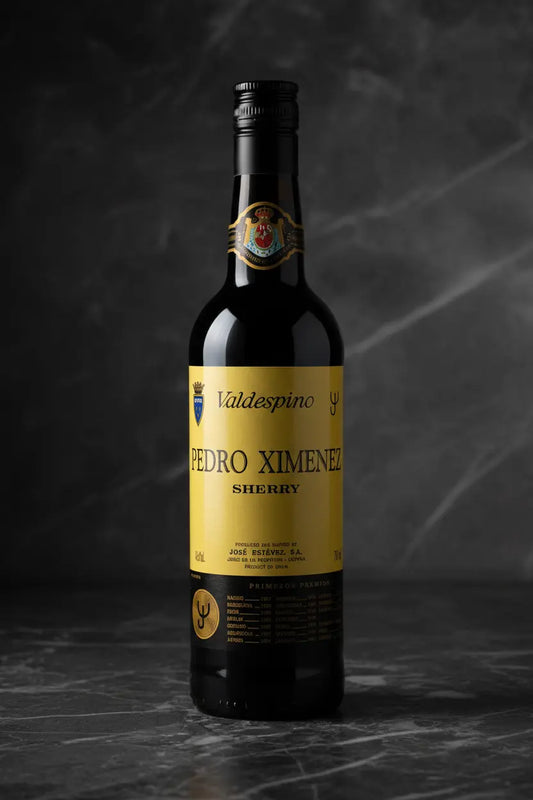
Valdespino Pedro Ximénez Yellow Label — Dark mahogany in colour. Intense aromas of raisin, rich and velvety on the palate. Grapes ripened under the Andalusian sunshine before vinification. Serve with desserts, chilled, or over ice cream. 17% ABV.
-
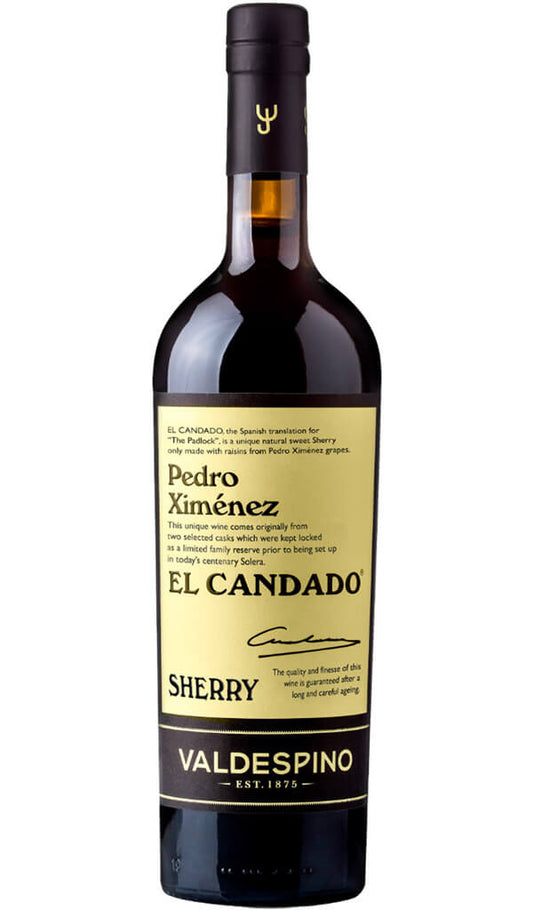
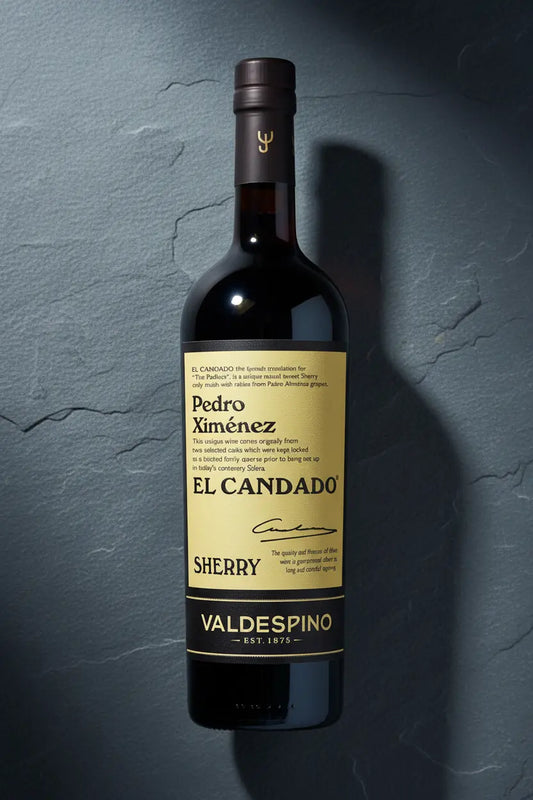
Valdespino Pedro Ximénez El Candado — One of the most treasured PX Sherries in the world. Intense golden mahogany with twilight hints. Elegant nose of raisins, figs, muscats, and luscious sweet musty grapes. Remarkable, complex, rich, and velvety on the palate. 17% ABV.
How to Enjoy Sherry
Fino and Manzanilla should be served well chilled (7–10°C) in a white wine glass, ideally consumed within a few days of opening. They are exceptional with seafood, jambón iberico, olives, and salted almonds. Amontillado is best served slightly chilled (13–14°C) and pairs beautifully with aged cheeses, charcuterie, and roasted nuts. Pedro Ximénez is magnificent at room temperature as a dessert wine, or poured generously over good vanilla ice cream — one of the great simple pleasures in the world of wine.
Explore our full range of Sherry below and discover why this ancient Andalusian wine is enjoying a well-deserved renaissance among wine lovers around the world.